
Cold Weather Gear and Protocols for Overnight Guards
By Robert Martinez
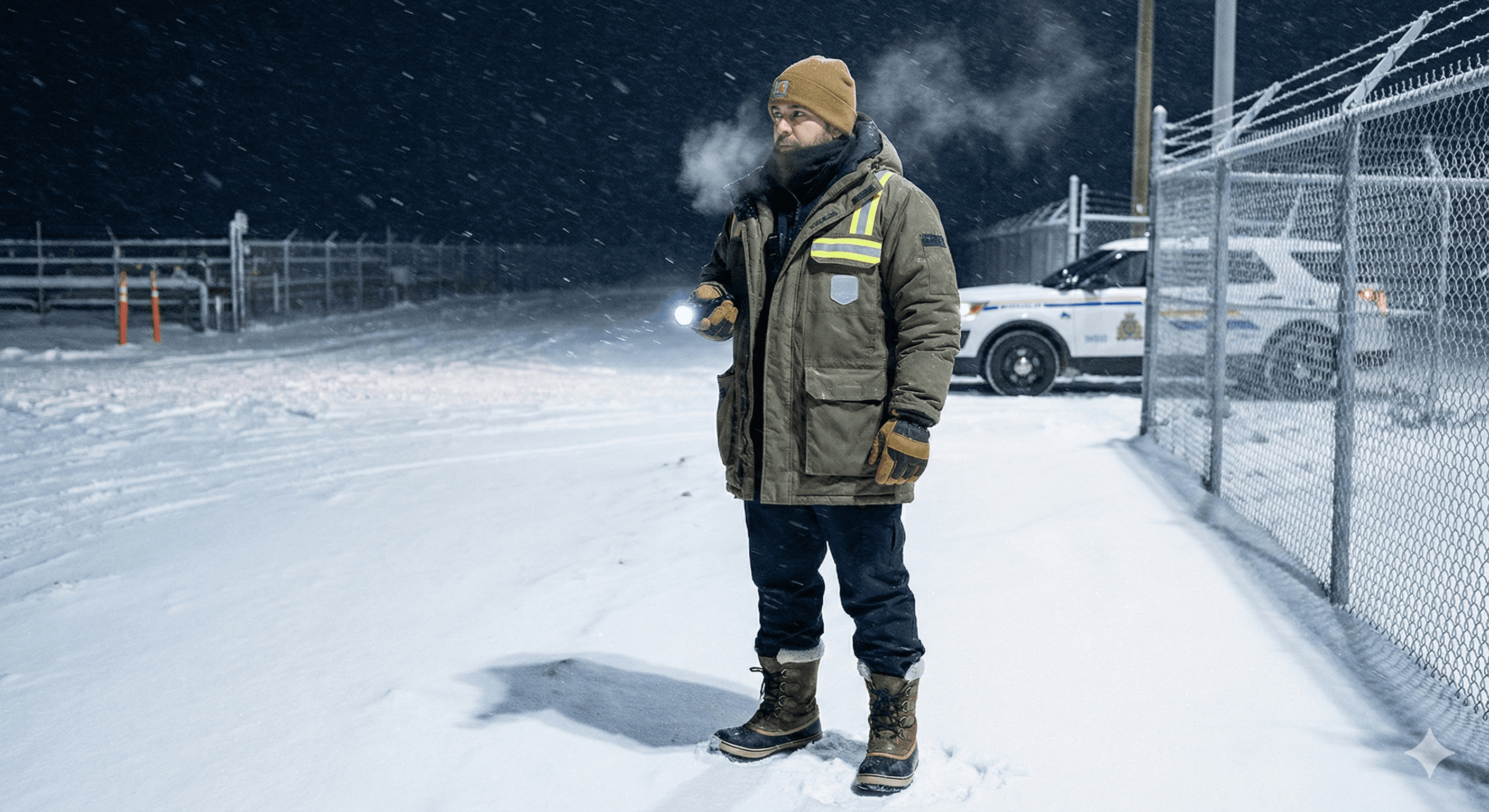
Hypothermia and fatigue are real threats to perimeter security. Learn the essential gear checklist and patrol protocols that keep officers warm, alert, and safe during freezing shifts.
Security doesn't stop when the temperature drops. In fact, equipment failure and forced entry attempts often spike during extreme weather. However, a freezing guard is a distracted guard. To maintain peak situational awareness during winter overnights, ProForce1 mandates specific gear standards and patrol protocols.
1. The Layering System
A single heavy coat isn't enough. We train officers on the three-layer system to regulate body temperature while moving between heated vehicles and freezing exteriors.
- Base Layer: Moisture-wicking synthetic material (never cotton) to keep sweat off the skin.
- Insulation Layer: Fleece or wool to trap heat.
- Shell Layer: Windproof and waterproof outer shell to block the elements.
2. Protecting the Extremities
Frostbite strikes fingers, toes, and ears first.
3. Modified Patrol Intervals
During sub-freezing conditions, the standard "continuous patrol" model is dangerous. We implement micro-breaks. An officer might patrol for 45 minutes and then spend 15 minutes in a heated checkpoint to raise their core temperature. This cycle prevents the gradual onset of hypothermia, which causes confusion and slow reaction times.
4. recognizing Hypothermia Signs
Every guard is trained to recognize the "umbles"—stumbles, mumbles, fumbles, and grumbles. If a colleague starts slurring speech or fumbling with keys, it is a medical emergency, not clumsiness.
Winter is coming. Is your site ready?
Don't let the cold compromise your security. ProForce1 officers are equipped to handle the elements so your assets stay protected 24/7/365.