
After-Hours Construction Site Security: A Practical Prevention Plan
By Security Operations Team
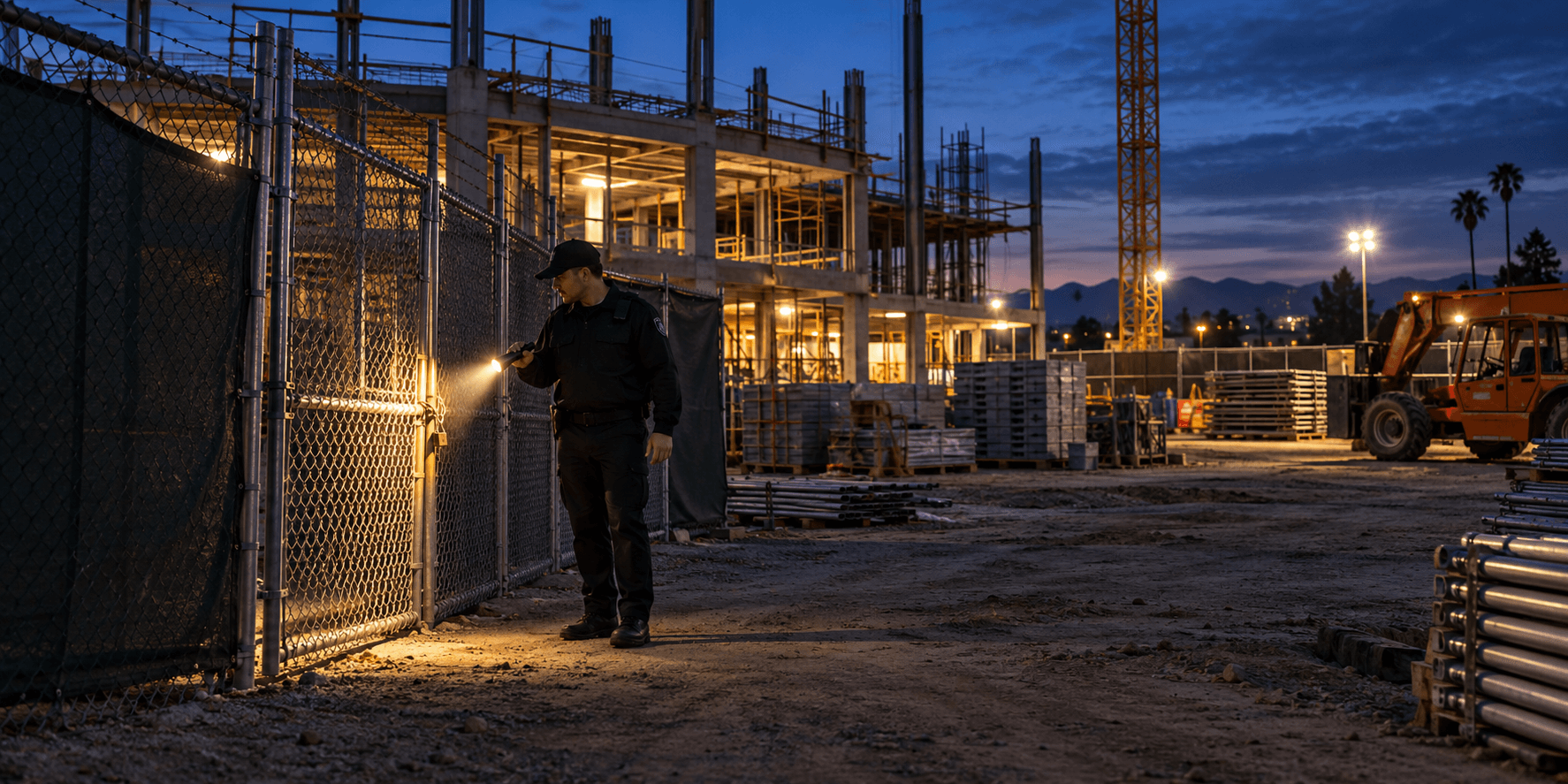
Construction sites change every day. A fence line shifts, a delivery arrives late, or valuable equipment gets left in a new location. An effective after-hours plan adapts to the work in progress and gives the site team a clear way to prevent, spot, and report problems.
Theft prevention starts before the last crew leaves. Site managers, contractors, and security officers need a shared picture of what is on site, where people can enter, and what to do when something looks wrong. Use this checklist to build a routine that fits the size and hazards of your project.
After-hours checklist
Map the site and identify what is exposed
Walk the perimeter with the site supervisor and mark public approaches, temporary openings, blind spots, storage areas, fuel, tools, and high-value equipment. Note which areas change as construction progresses. A short, current risk map helps the team focus controls where they matter.
Control every entry point
Keep a current list of authorized workers, vendors, and after-hours visitors. Secure gates, temporary doors, ladders, and openings at the end of each shift. Remove or lock away access aids that make it easy to climb a fence or reach an upper level. Route visitors through one monitored entrance when practical.
Secure tools, materials, and mobile equipment
Store portable tools in locked containers and park heavy equipment in a designated area away from the perimeter. Remove keys, secure trailers, and use appropriate immobilizers or equipment tracking where available. Record serial numbers and keep current photos of high-value items so a loss can be reported accurately.
Make the perimeter visible
Repair damaged fencing and keep gates closed and latched. Use lighting to cover entrances, equipment areas, and routes that need observation while avoiding glare into neighboring properties. Trim or reposition materials that block views. Cameras can support review and awareness, but they work best when the site has a clear process for monitoring and responding to alerts.
Use patrols that are purposeful and documented
Set patrol timing around site activity, known exposure windows, and the layout of the property. Vary routes when appropriate, while still checking required points on every round. Record arrival and departure times, gate and fence conditions, unusual vehicles, alarms, and actions taken. Give officers clear post orders and a reliable way to contact a supervisor.
Agree on a safe response before an incident
Write down who receives alarm calls, who can authorize entry, and when to contact emergency services or law enforcement. Officers should observe, report, and follow site procedures; they should not enter unstable or restricted work areas or pursue a suspected intruder into an unsafe location. Share current site hazards and emergency contacts with everyone assigned to after-hours coverage.
Close the loop at shift change
Use a short handoff between the site lead and security team. Confirm which contractors remain, which deliveries are expected, what equipment moved, which alarms or cameras are offline, and whether any gate or lighting repair is pending. Resolve gaps before the site is left unattended.
Keep the plan current
Review the plan when the site layout changes, new equipment arrives, or a contractor schedule shifts. A short review with the site lead and security provider can catch gaps before the next overnight shift. Keep contact lists and post orders current, and document follow-up for any broken light, damaged fence, or unavailable camera.
Need after-hours site coverage?
ProForce1 can help construction teams plan visible patrols, access checks, and clear incident reporting around their project schedule.
Talk with our team