
What Is Fire Watch and When Is It Legally Required in California?
By Security Operations Team
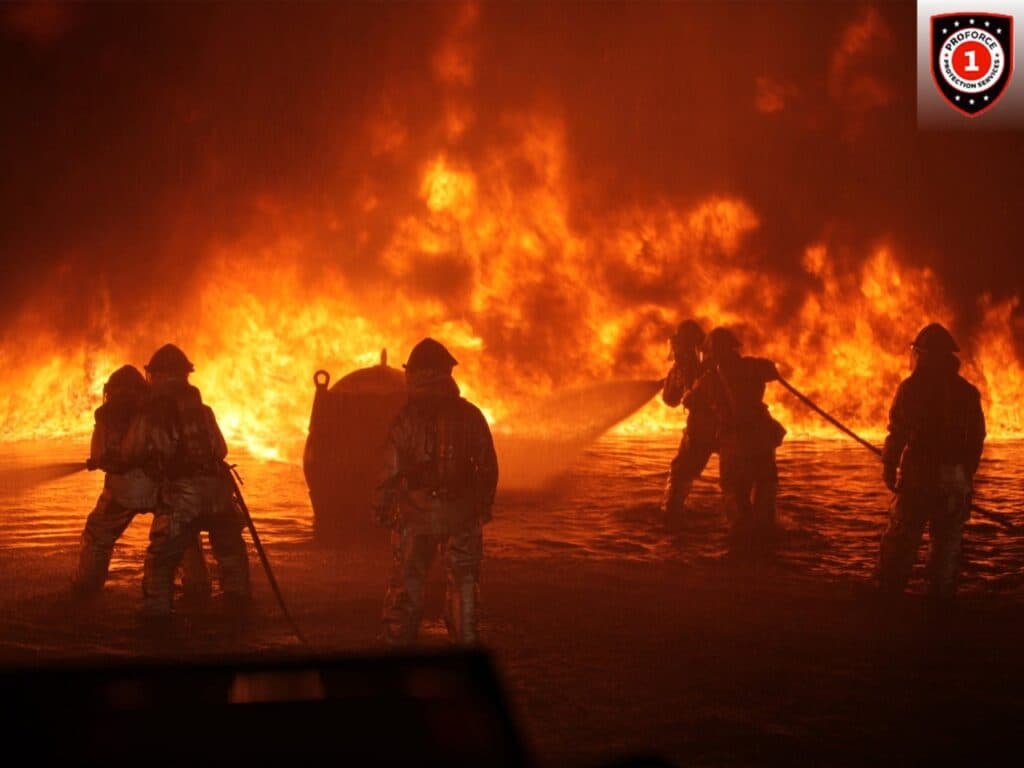
Fire watch is a short-term, temporary safety control program in which a trained individual walks through a building or a site at a fixed time to look for fire hazards when the building or site is not operating or is not capable of operating a total fire protection system. The California Fire Code and fire marshal rules mandate it when a fire alarm, a sprinkler system, or a standpipe is out of service for more than four hours in a 24-hour period. Have it skipped, and you'll be facing fines, stop-work orders, or even an insurance claim denial after a real fire! When you manage a property, run a construction site, or even run a business in California, that's one of the regulations that you don't want to learn the hard way.
Why Does California Take Fire Watch So Seriously?
California burns. It's not dramatic, it's just a fact supported by numbers. Cal Fire reports more than 7,500 wildfires burning more than 320,000 acres in just one recent year — and that doesn't even include structure fires in dense urban areas such as Los Angeles and San Francisco. Throw in older buildings with aging electrical infrastructure, construction activity in bustling cities such as Sacramento and San Diego, and you have a state that really can't afford to let standards lapse.
And when a building's fire suppression system fails, even for a short time, it isn't a minor inconvenience for the state. These are the events that will usually cause a mandatory fire watch:
- Fire alarm systems that have been down for more than 4 hours in a 24-hour period
- Sprinkler systems turned off during testing, repair, or renovation
- Standpipes disabled in high-rise buildings during construction or maintenance
- Areas where there is hot work (welding, cutting, grinding) and no active suppression
- Occupied buildings undergoing fire system upgrades or inspections
- Major incidents involving a large number of people that are likely to compromise evacuation routes or systems
In addition to these minimum triggers, local fire departments, including the LAFD, as well as smaller county fire marshals, have the authority to require watches that are in addition to these minimum triggers based on occupancy type and building risk classification.
Who Actually Needs to Hire a Fire Watch Service?
For most commercial buildings, multi-family housing, or job sites, the need for a fire watch can happen without warning. It's usually when a property manager is told by a contractor that the sprinkler system requires 3 days of repair work that they get caught off guard. This category is experienced repeatedly by construction companies in occupied buildings, hospitals in upgrade of their systems, hotels during renovation, and warehouses with flammable materials.
Here's a breakdown of who typically needs coverage and why:
- General contractors: Any job involving hot work or system shutdowns on active sites
- Property owners and managers: Buildings with impaired alarms or sprinklers, even temporarily
- Hospitals and care facilities: Life-safety code requires zero gaps in coverage for occupied patient areas
- Hotels and hospitality businesses: Guests present during system downtime raise liability substantially
- Event organizers: Large gatherings in venues with reduced exit capacity or system limitations
- Warehouse and industrial operators: Storage of combustible materials plus any system outage
The people who get burned are the ones who assume a quick repair job doesn't count. It does. The four-hour clock starts the moment the system goes down, not when someone remembers to check the code.
What Happens If You Skip a Required Fire Watch?
This is where things get expensive fast. Fire code violations in California can bring daily fines that stack up the longer a system stays impaired without coverage. Beyond fines, a fire marshal can issue a stop-work order on a construction site, which halts your entire project and every subcontractor on it until you're compliant. That's lost labor costs, delayed timelines, and unhappy clients, all avoidable with a phone call to a licensed provider.
Insurance is the bigger, quieter risk. If a fire breaks out during a period when your system was down and you didn't have a documented fire watch in place, your insurer may deny the claim entirely. Documentation matters here almost as much as the watch itself. A qualified provider like the team behind fire watch security services keeps detailed logs, timestamps, and incident reports, exactly what an insurance adjuster or fire marshal will ask to see after the fact.
How Do You Choose the Right Fire Watch Provider?
Not every security company is equipped to handle this properly, and the difference shows up when it matters most. A good provider trains its personnel specifically in fire code compliance, not just general patrol duties. They should know your local jurisdiction's requirements, since a fire watch in Los Angeles County can carry different documentation standards than one required by a fire marshal in Orange County or Sacramento.
When comparing providers, look at these factors side by side:
| Factor | Basic Security Guard | Trained Fire Watch Personnel |
|---|---|---|
| Fire code knowledge | Minimal | Extensive, jurisdiction-specific |
| Patrol frequency | Inconsistent | Set intervals matching code (typically every 30 minutes) |
| Documentation | Rarely provided | Detailed logs with timestamps |
| Communication with fire department | None | Established protocol |
| Insurance compliance support | Not typically offered | Yes, with proper records |
If your building or job site is facing a system shutdown, don't wait until the fire marshal shows up asking questions. Get a licensed, documented fire watch in place from the moment the system goes offline, keep the paperwork, and treat it as part of your regular safety operations rather than an afterthought. It's a far smaller cost than a fine, a stalled project, or a denied insurance claim after something goes wrong.
Facing a Fire System Shutdown?
ProForce1 provides licensed, code-compliant fire watch coverage across California with detailed logs, timestamped patrols, and the documentation fire marshals and insurers expect. Get coverage in place before the four-hour clock runs out.
Request Fire Watch Coverage